How Commercial Buildings Can Responsibly Dispose of Outdated Technology
You’ve decided to upgrade your building’s AV system or replace outdated network equipment. The new technology is on order, installation is scheduled, and the project is moving ahead. But once the old equipment comes out, what happens next?
For commercial property owners and facilities managers, disposing of outdated technology is not as simple as throwing it in a dumpster. Proper handling protects your organization, supports compliance, and makes the upgrade process far more manageable.
Why Old Technology Requires Special Handling
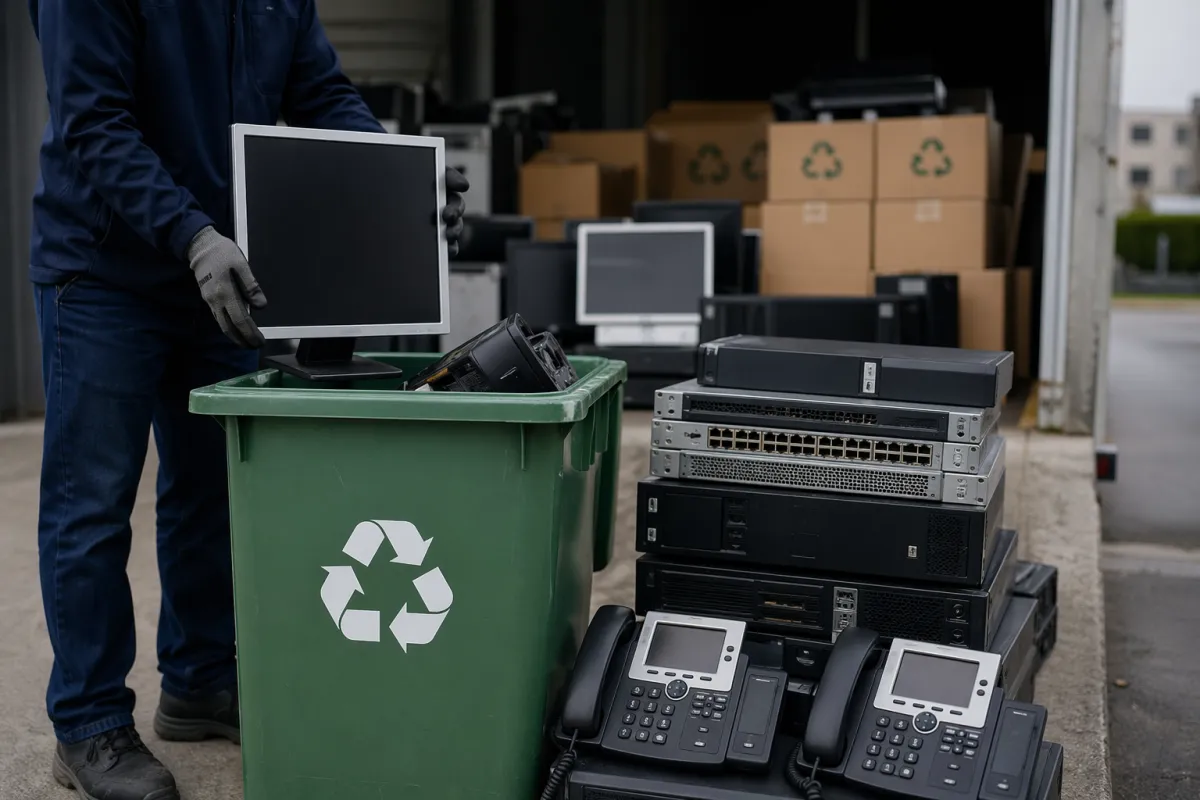
Electronic equipment contains materials that should never end up in a landfill. Monitors, computers, phones, and AV components often contain lead, mercury, cadmium, and other substances that can contaminate soil and groundwater if disposed of improperly. What looks like a pile of outdated equipment can quickly become an environmental liability.
Data security is another major concern. Even if devices have been wiped or hard drives removed, residual data can still remain on network equipment, phones, and other connected systems. Discarding these items without proper processing can create unnecessary security risks for your organization.
There is also the issue of regulatory compliance. Many states and municipalities have specific requirements for electronic waste disposal. Failing to follow those rules can lead to fines, legal exposure, and avoidable headaches.
What Responsible Electronics Recycling Looks Like
Responsible disposal starts with the right recycling partner. Commercial buildings should work with certified e-waste recyclers, ideally companies with R2 (Responsible Recycling) or e-Stewards certification. These credentials indicate that the recycler follows recognized environmental and data security standards throughout the process.
A qualified recycler should also provide documentation showing how equipment was handled and where it went. This chain-of-custody paperwork is important because it gives your organization proof that disposal was managed properly. Those records should be kept alongside your other facility and project documentation.
The recycling process itself involves more than simple collection. Equipment is sorted, dismantled, and processed so materials such as copper, aluminum, and precious metals can be recovered and reused. Hazardous components are handled separately to prevent contamination. In some cases, equipment that still has useful life can be refurbished and resold rather than scrapped.
That is why it is worth evaluating whether some assets still have value. Newer equipment in working condition may be eligible for resale or donation to schools, nonprofits, or refurbishers. A knowledgeable technology integrator or recycling partner can help determine what should be recycled and what can still be put to use.
Build Disposal Into the Upgrade Plan
The most effective approach is to make disposal part of the upgrade plan from the beginning. When requesting quotes for new technology installation, ask whether removal and responsible recycling of existing equipment can be included in the scope. Many technology providers, including Integrated Building Systems, can coordinate both installation and disposal as part of one project.
This approach simplifies the process considerably. Your team is not left dealing with stacks of decommissioned equipment in storage rooms or trying to arrange disposal after the project is already underway. Instead, old systems are removed as new ones are installed, and the transition stays organized.
Timing matters as well. Equipment removal should be coordinated as closely as possible with the go-live date for new systems. Removing old technology too early can create service gaps and operational disruptions.
It is also smart to budget for disposal from the start. Although some equipment may have resale value, responsible electronics recycling often comes with service fees. Planning for those costs upfront helps avoid unexpected charges later.
Staying Compliant and Thinking Long Term
Keeping up with disposal requirements is an important part of risk management. Regulations can change, and facilities managers should stay aware of current local and state requirements. A trusted recycling partner can help ensure your disposal process aligns with the latest standards.
It also helps to think beyond the current upgrade. A technology lifecycle plan can make future replacements easier by documenting installed systems, expected service life, and likely replacement timelines. When disposal is built into long-term planning, buildings are less likely to accumulate obsolete equipment in storage areas, closets, and back rooms.
Regular technology audits can help with this. Periodic walkthroughs make it easier to identify equipment that is outdated, unused, or ready for replacement. Disposing of old technology promptly rather than stockpiling it keeps facilities more organized and reduces the burden when larger upgrades happen.
As the electronics recycling industry evolves, more manufacturers are designing products with end-of-life recovery in mind. Choosing technology partners who value sustainability today can make responsible disposal easier for years to come.
Planning a technology upgrade?
Plan Your Upgrade and contact us to discuss installation and responsible equipment disposal.